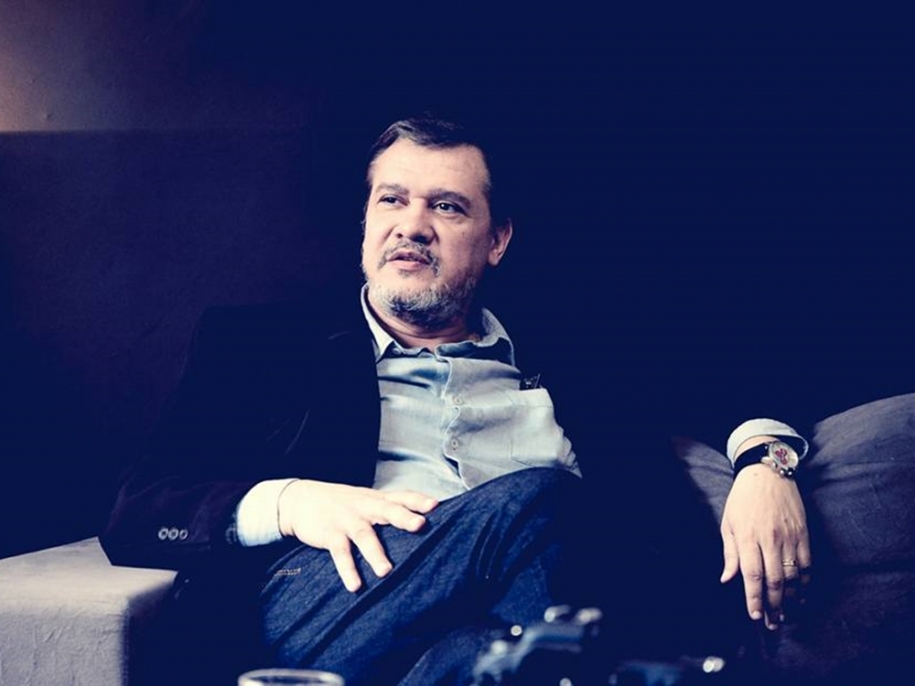

A 60-year-old journalist from the countryside of Espírito Santo state was detained for over a year under the premise of disseminating “fake news that is harmful to the Democratic Rule of Law.” The arrest was ordered by Justice Alexandre de Moraes in December 2022. Despite the request of the Federal Public Prosecutor’s Office (MPF) to have the case declared null and void due to procedural irregularities and a lack of evidence of any crime, the reporter was kept in prison for 368 days. He was granted provisional release on 20 December 2023, subject to the same precautionary measures imposed on those arrested following the January 8th events.
“The journalist Jackson Rangel has not even been formally charged or had the procedure against him dismissed, despite repeated petitions from the Prosecutor General’s Office (PGR),” states defence lawyer Gabriel Quintão, noting that Rangel was also never interviewed by the Federal Police (PF). “This is a violation of due process, something of a medieval nature,” he says.
Rangel’s arrest was requested irregularly by the Espírito Santo State Prosecutor General’s Office (PGJ-ES) directly to the STF (Supreme Federal Court) in September 2022. Moraes granted the request, despite the lack of evidence and the State Public Prosecutor’s Office’s illegitimacy in filing the petition (read more below). Consequently, the journalist should not have remained in custody, as established by the Code of Criminal Procedure (CPP).
According to the CPP, a police inquiry must be concluded within 10 days—with the possibility of a further 10-day extension—and the individual must be formally charged by the Public Prosecutor’s Office within five days of the conclusion, otherwise the case must be dismissed. This is because a formal charge must contain robust evidence of a crime and be forwarded to the judge, who can accept or reject it, thereby deciding whether or not to maintain the detention.
However, in the case of 60-year-old journalist Jackson Rangel, the MPF issued an opinion contrary to the PGJ-ES’s request and did not formalise a charge. The institution found no evidence of a crime and also “did not recognise the legality and constitutionality of the procedure, requesting its dismissal,” explains Quintão, affirming that, even with the request from the Public Prosecutor’s Office, the reporter remained detained for over 12 months.
“I was subjected to a regime of torture incompatible with the Constitution and international human rights treaties,” laments the Espírito Santo native, stressing that the “attack” was not only against him but against press freedom and the Democratic Rule of Law. “I was the victim, indeed, of anti-democratic acts that violated due process, the constitutional order, and every imaginable civilised value,” he said in an interview with Gazeta do Povo.
A resident of the city of Cachoeiro de Itapemirim, Rangel has worked as a journalist for 40 years, producing investigative, analytical, and opinion pieces of state-wide repercussion. He is also a lawyer and a businessman, owning the newspaper Folha do ES for 35 years. “I have always worked independently, scrutinising and publishing facts that were inconvenient to the powerful figures of the day,” he said.
The reporter notes that he has been the target of various lawsuits brought by individuals who felt aggrieved by being mentioned, and that in 2023 alone, he secured favourable court decisions in at least six cases filed against him due to his articles. “And that’s normal,” he asserts. “What is abnormal is arresting journalists to silence and incapacitate them, something not seen since the dictatorship,” he adds.
“Virulent Posts” against the Supreme Court
Jackson Rangel was arrested on 15 December 2022 for the alleged dissemination of “fake news that is harmful to the Democratic Rule of Law,” vague terms which, in practice, refer to his expressions of indignation and criticism of the government and the STF.
In the confidential decision presented by Moraes, which the Gazeta do Povo report had access to, the justice accepted the Espírito Santo State Prosecutor General’s argument that the journalist was the author of “virulent posts” against the Supreme Court on his X (formerly Twitter) profile. Among Rangel’s quotes were “without freedom, there is no independence,” “it’s a disgrace for one Branch of Power to seize the role of another,” and “there is no way the Country can move forward with such a submissive and vassal-like political system.”
Also quoted are his posts: “Alexandre de Moraes achieved the feat of provoking the people and proving his power stems from them” and “I have no doubt about the STF being invaded at any moment today in an act of desperation by Brazilians to reclaim their freedoms.” The posts were made in 2022.
The complete list contains nine quotes, and the document claims that the commission of various crimes was “sufficiently demonstrated,” constituting “an act of true digital terrorism.” The decision also states that the journalist was already the target of lawsuits due to “fake news” he published and that the newspaper Folha do ES was part of a “digital militia” aiming to destabilise democratic institutions.
Rangel was, therefore, one of the 27 targets in Espírito Santo in the 1st phase of Operation Lesa Pátria (“Lèse-motherland”) , which ordered his preventive detention as well as the search and seizure of all electronic equipment belonging to the media outlet he manages. “They destroyed my small newsroom,” laments the reporter and businessman, mentioning that the 20 computers used by his employees were taken by the Federal Police (PF).
“Their goal was to silence my voice, interrupt news reports, and create an atmosphere of criminalisation and marginalisation of the newspaper,” he points out, asserting that he produced articles containing allegations involving various authorities in Espírito Santo and that these individuals have personal lawsuits open against the journalist because of his stories.
“Knowing that I lack the economic and political power of the major news outlets, they persist with private lawsuits and even the direct petition to Justice Alexandre de Moraes to marginalise and constrain me,” states Rangel, noting that the state prosecutor is not entitled to make direct petitions to the STF, as that jurisdiction belongs to the PGR.
ES public prosecutor’s office took the case to the STF
According to the first opinion from the Federal Public Prosecutor’s Office (MPF) in October 2022, which requested the case be nullified, the Espírito Santo State Prosecutor General’s Office truly lacked the jurisdiction to directly request the STF for the journalist’s arrest, search and seizure, and the breaking of telephone and banking secrecy. The MPF presented the situation in the document as an “affront to the legal framework” regarding the jurisdiction of each branch of the Public Prosecutor’s Office, leading to “an absence of procedural legitimacy.”
Furthermore, the MPF pointed out that the demand under analysis also replicated an investigation already opened in the State Court—violating the principle of criminal law (double jeopardy) which prohibits prosecuting, judging, and punishing someone more than once for the same conduct.
This lawsuit, cited by the State Prosecutor’s Office in the direct petition to the STF as an argument for the accusation of spreading “fake news,” concerns reports published by the journalist in 2021 regarding evidence of corruption and unlawful bias in a R$139 million tender process by the Espírito Santo government.
At the time, confidential sources provided Rangel with a USB drive containing evidence of the crime. According to the journalist’s defence, the material was forwarded to the Federal Public Prosecutor’s Office, which acknowledged the need for an investigation but suggested that the inquiry should be conducted by the Espírito Santo Public Prosecutor’s Office. The state prosecutor, however, dismissed the case, alleging that the material disclosed was “unlawful evidence for violating electronic correspondence without a judicial order.”
In addition to prohibiting an investigation into the evidence of corruption, the prosecutor also opened a police inquiry against the journalist who reported the scandal. A councillor, a radio broadcaster, and two state members of Parliament who disclosed the evidence from the USB drive were also formally named as suspects.
Responding to the situation, the Brazilian Press Association (ABI) questioned the STF about the case, alleging that confidential sources who delivered the USB drive were employees of the winning company in the bidding process and that the evidence revealed a “criminal organisation formed by state public agents and private agents,” the ABI stated.
“In this context, the press and members of Parliament reported the content of the USB drive in newspapers, in the plenary, and to the investigative bodies, informing society and requesting action,” the document continued. It received a favourable opinion from Justice Dias Toffoli on 21 June 2022.
The justice’s decision requested that “public authorities involved cease performing acts aimed at holding journalists accountable (for the protection of journalistic source confidentiality)” in the disclosure of the alleged corruption scheme involving the state’s Department of Traffic (Detran-ES).
In an interview with Gazeta do Povo, the former president of the ABI, journalist Paulo Jerônimo Souza, states that the entity worked tirelessly with its lawyers in defence of Rangel and the other targets of the Espírito Santo Prosecutor’s Office because the situation was an “attack on the freedom of the press.” “And we believed at the time that, with the justice’s response, the case would be resolved,” said the entity’s former president, expressing indignation at the subsequent handling of the case.
“Keeping Rangel and the other reporters detained for over a year, without any formal accusation, is a violation of human rights,” he lamented. Gazeta do Povo also got in touch with the current ABI management, which declined to comment.
Attempt to “initiate a new persecutory front,” says MPF
According to the MPF’s opinion from October 2022, the action by the PGJ-ES, requesting the arrest of the case’s reporters directly to the STF, was an attempt to “initiate a new persecutory front,” which would represent “a possible attempt to circumvent and disobey” Dias Toffoli’s decision. The MPF therefore requested the “rejection of the petition for precautionary measures and the subsequent dismissal of the case records.”
Moraes, however, upheld the detention. “They found nothing against me and held me in custody to oppress me, marginalise me, persecute me, and undermine my 40 years of journalistic activity,” states Rangel, who was placed by the STF in the same “fake news inquiry” as journalist Allan dos Santos and businessman Luciano Hang.
Furthermore, lawyer Gabriel Quintão points out that the councillor and the radio broadcaster who also reported on the USB drive case were detained for the same period as Rangel, as targets of the same direct petition from the Espírito Santo Prosecutor’s Office to the STF. “And two state members of Parliament who were in office were targets, and are still wearing ankle monitors today, without being questioned and without formal charges, with a ban on leaving the state and even giving interviews.”
Gazeta do Povo attempted to interview the PGJ-ES by phone, email, and WhatsApp, but received no response. According to their press office, “the procedure is subject to judicial secrecy in the Supreme Federal Court (STF), which is why the Public Prosecutor’s Office of the State of Espírito Santo (MPES) will not comment on the matter.” The report also attempted to contact the STF, but their press office also informed that “the lawsuit is confidential.”
What the defence awaits
For Jackson Rangel, the fact that the MPF has requested the dismissal of the lawsuit multiple times is evidence that “Justice Alexandre de Moraes was misled” by the state prosecutor’s office, and thus his defence hopes that the PGR’s opinions will be accepted as soon as possible to revoke the precautionary measures imposed.
“This won’t bring back over 12 months of deprivation of liberty, more than a year of life incarcerated, but it will at least be the recognition that there is some rule of law and a Constitution in the country,” concludes lawyer Gabriel Quintão.

Fonte. Gazeta do Povo